
 Serving Milford, MA & the
  (508) 456-8838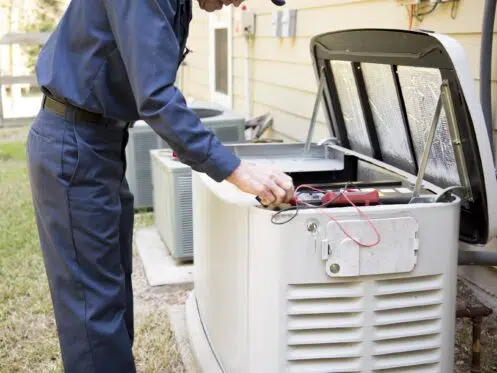
When the power grid falters, a reliable backup generator can turn a dark night into just another cozy evening indoors. Picking the right model means balancing fuel type, wattage needs, and budget to fit your household’s habits.
Sizing Your Generator: Matching Capacity to Your Home’s Needs
Picking a generator with the right wattage means deciding which appliances you cannot live without when the grid goes down. You want enough muscle to run your refrigerator, some lights, perhaps a furnace or well pump, but not overspend on capacity you won’t use. Start by listing each device’s starting and running wattage. Air conditioners surge high when the compressor kicks in, while LED bulbs sip energy.
Adding those numbers gives you a ballpark of the minimum generator size you need. If you expect to power larger items, such as electric water heaters, note that those can demand a thousand watts or more just to ignite. Always add a small buffer to your total so that the generator isn’t working at its limit day after day. Once you know the wattage threshold, you can compare models that match or slightly exceed it. A unit rated at 15 kilowatts covers most moderate-sized homes comfortably, while a 7 to 10 kilowatt setup handles critical circuits without feeling wasteful.
Fuel Options: Pros and Cons of Propane, Natural Gas, and Diesel
Your choice of fuel influences runtime, storage, and maintenance. Propane sits in tanks on your property and is stable for years, although it can run out faster than liquid fuels. A ratio of about four gallons per hour gives you some sense of reserve, but you’ll have to refill the tank by truck once it dips below a quarter full. Natural gas ties your generator to the home’s gas line. As long as the main supply is on, you enjoy unlimited runtime without worrying about deliveries. However, any service interruption on the utility side stops both home heating and backup power at once.
Diesel packs more energy per gallon and keeps a generator running longer, but fuel degrades in storage unless you treat it and rotate tanks. Diesel units often require more frequent filter changes and occasional injector cleaning. Consider how often you run your backup generator during storms, the ease of deliveries in your area, and whether you prefer on-site storage or tapping into existing pipelines when you choose your fuel.
Portable vs. Permanent Standby: Finding Your Installation Style
Portable generators sit on wheels and connect via cords or inlet boxes, giving you mobility if you need power in a workshop, garage sale, or off-grid adventure. You’ll roll it out when the lights go off and plug it into essential circuits. That flexibility comes with manual setup: refueling, running extension cords, and positioning away from doors and vents to avoid exhaust buildup. A standby generator, in contrast, mounts permanently outside, linked to your electrical panel with an automatic transfer switch.
The moment the voltage dips, it fires up and shifts loads over, no manual steps needed. Standby units cost more up front and require a concrete pad or gravel bed, yet their hands-off operation makes them ideal if you’re away from home during storms or if reliability is nonnegotiable. Your choice depends on how often you face outages, your comfort with handling fuel and cords, and whether you value quick flick-of-a-switch convenience or budget-friendly versatility.
Transfer Switches and Hookups: How Your Generator Connects
The interface between your generator and home circuits hinges on a transfer switch. Manual transfer switches let you flick a lever to cut power from the grid and feed selected breakers from the generator. They’re simple to install and cost less, though you must return to the panel each time the power blinks off. Automatic transfer switches work seamlessly: they sense an outage, shut down incoming service, and bring the generator online in seconds. Wiring these into a standby generator’s installation protects line workers by preventing backfeed onto the grid.
Always enlist a licensed electrician for this step because local codes demand proper lock-out procedures and labeling. You’ll also choose whether to power your entire panel or only a subset of circuits. Critical-load panels limit the generator to essential items, such as lights, fridge, sump pump, while whole-house setups give you full backup at a higher fuel burn. Getting the switch and connection right makes your generator a safe and reliable backup partner.
Noise and Placement: Finding a Friendly Spot
Generators range from surprisingly quiet to persistently loud, depending on your choices. In neighborhoods where sound carries, a quieter unit can help you avoid awkward conversations with neighbors at midnight. Look for models rated under 70 decibels at full load, roughly the hum of a vacuum cleaner heard from a few feet away. Placement matters too.
Set your generator on a firm, level pad at least 5 feet from doors or windows, so exhaust and mechanical noise stay outside living areas. Consider installing a small acoustic barrier, like a lattice with gravel at its base, to muffle sound without blocking airflow. Proper clearance around the unit keeps it cool and prevents hazards, while thoughtful positioning along a side wall or near a fence can hide it from view. Checking local codes for setback requirements ensures your neighborly relations stay cordial when the generator kicks on.
Budgeting and Long-Term Value: Upfront Costs vs Reliability
Balancing what you pay now against what you save later helps you choose wisely. Portable units under 10 kilowatts start around $800, and you can add cords and inlet boxes as needed. Standby generators begin near $3,000 for basic models but increase in price with larger capacities or premium enclosures.
Factor in installation costs for pad work, transfer switches, and wiring; these can equal or exceed the equipment price. If your area sees frequent outages, a standby unit can pay for itself in prevented food spoilage, saved hotel stays, and uninterrupted work or medical equipment operation. Even if outages are rare, owning a generator can boost resale appeal and comfort. Think through your tolerance for setup hassle, your household’s reliance on electricity, and how much peace of mind you want. That perspective turns the sticker price into a savvy investment rather than an expense.
Advanced Integration: Smart Monitoring and Remote Control
Modern generators can link to Wi-Fi or cellular networks, letting you check status and run diagnostics from your phone. You might receive a low-fuel alert before storms hit or see weekly self-test results without stepping outside. If the unit stalls during a power cut, some systems reboot automatically or send a push notification so that you can trigger a restart remotely.
These features cut down on surprise failures and trips in harsh weather. Installation requires a compatible control module and, sometimes, a data plan, yet the convenience can justify the extra cost. Home automation enthusiasts will appreciate tying generator health into their central dashboards, seeing battery voltage, load percentages, and runtime hours alongside thermostat settings and security alerts.
It’s Time for Uninterrupted Power
Choosing the right generator keeps your fridge running, your furnace warm, and your lights bright, no matter what the weather brings. At Tingley Home Services in Milford, MA, our electrical service pros install transfer switches, handle fuel hookups, and perform seasonal maintenance that keeps your unit in peak condition. If you’re serious about staying powered through the next blackout, call Tingley Home Services to set up your generator consultation.

